Friday, 4 May 2012

Week 9 - percention and communication

When I successfully applied for my job at Waitrose, at first I did not think I would get on with my colleagues as I thought they would be bossy, know-it-all’s because they had been working there a lot longer than me. I thought that they would look down on me and think that I was not as good as them because I had only just started. However, when I actually had my first day working at Waitrose, I realised that most of my colleagues had also only just started, so we were all in the same boat. The other employees who had been working there for longer were also a lot different to how I had perceived them; they were in fact really kind and helpful, and willing to guide me in my first few weeks of working in the store. When I got settled down I realised I had had a completely wrong perception of my colleagues at first, and that perception is not always reality. A person has to have an open mind to gather the necessary knowledge needed for a valid judgement to be made.

Read the article below on “How to Improve Staff Communication.  Using the recommendations from the article, identify 3 ways in which the university can improve communication with the students.

As mentioned in the article, everyone needs to have a shared purpose. This means that the students need to know that the lecturers are on the same page, and that the shared goal is for them to leave university with a degree. To communicate this to the students they could make a short video to be shown at the start of the academic year. Video can be very powerful when trying to convey a message and can be a quick and easy way to get people motivated, the main message in the video would be that the university wants the students to walk away with a degree as much as they themselves do.

As much as 85% of students use Facebook (Arrington, 2005); therefore it would be an excellent idea for the university to start using Facebook too. One idea would be to make a Facebook group for each module, where students can share ideas and ask questions about that specific module and the assignments that they have been set. Students should also be encouraged to make their own Facebook page when participating in group work. This, alongside Blackboard, would make communication between students and lecturers a lot more efficient.

My final way in which I believe the university can improve its communication is to engage its students more; “The CIPD has identified three main drivers of employee engagement: having the opportunity to feed your views upwards; feeling well informed about what is happening in your organisation; and believing your manager is committed to the organisation,” Clake (2010). Therefore I believe there should be an easier way for students to express their views; this could be as simple as a suggestion box (Waddington, 2010). There should also be an easier way for the university to inform students of what is going on, as they do not always check Blackboard for updates. This is where Facebook is useful again, as all students would get notifications for events and other things that are happening.


References


Arrington, M. (2005) [online] Available from: http://techcrunch.com/2005/09/07/85-of-college-students-use-facebook/ [accessed on: 04/05/12]

Waddington, A. (2010) how to improve communication. [online] Available from: http://documents.manchester.ac.uk/display.aspx?DocID=8436 [accessed on: 04/05/12]

Monday, 30 April 2012

Week 7 - Conflict


Week 7 – conflict

Conflict is a disagreement or an argument between two parties, usually when people have different opinions or interests. Conflicts can arise from anywhere between two people to two different countries.

During my time working at Waitrose, a conflict arose between my team of colleagues due to clashes in personality. Some people were very bossy and opinionated and tried to control their colleagues even though they were on the same level of the work hierarchy. Others believed that the way they were being treated was unfair. This conflict had an effect on the way our team worked as we were unable to successfully work together. It also demotivated employees and made us less inclined to work hard.

To overcome this conflict our manager set up activities, such as team building, extra training days, and other events outside of work. We had a few events like dinners and parties; these successfully helped to overcome the conflict as it was a relaxed environment in which we could all relax and get to know each other better. After these events our team became friendlier and not just work colleagues.

One study on conflict was ‘Sources of Power’, carried out by John French and Bertram Raven in 1959. They identified five bases of power:

1. Legitimate – This comes from the belief that a person has the right to make demands, and expect compliance and obedience from others.

2. Reward – This results from one person's ability to compensate another for compliance.

3. Expert – This is based on a person's superior skill and knowledge.

4. Referent – This is the result of a person's perceived attractiveness, worthiness, and right to respect from others.

5. Coercive – This comes from the belief that a person can punish others for noncompliance.

French and Raven (1959)

By being aware of these five sources of power people can gain a better understanding of why they are influenced by someone, and decide whether they want to accept their power or not. For example, if an employee is getting orders from someone other than their boss, they may decide that they have no authority to give those orders and decide not to follow. It can also give people a better sense of their own power and help them to build leadership skills.


The NHS report that work-related stress has soared by 40% and absentee rates by 25% during the recession. During the recession, participants generally reported a poorer status in six out of the seven areas assessed (job demands, job control, peer support, relationships, job role and changes at work). There was no significant difference in managerial support before compared with during the recession. This article shows that during the recession people were very worried about the security of their jobs, putting a lot of stress on them to work hard and prove that they deserved to keep their job. However, this had an even worse effect as with higher work-related stress rates, comes higher absentee rates. This article shows a high correlation between work-related stress and work absences, however, it may be unreliable as a different number of people were used before the recession to the study after the recession.

In conclusion, all organisations and businesses are likely to experience conflict of some sort, whether it’s between two people or between two parts of the organisation. However, conflict can easily be overcome by using different management techniques and team building exercises.

References:

French and Raven (1959) [online] Sources of Power. Available from: http://www.mindtools.com/pages/article/newLDR_56.htm [Accessed on: 30/04/12]

Mullins, L.J. (2010) The Nature of Leadership. 9th ed. Great Britain: Financial Times Prentice Hall.

 NHS (2012) [online] Workplace Stress. Available from: http://www.nhs.uk/news/2012/02February/Pages/stress-sick-days-economic-downturn.aspx [Accessed on 30/04/12]

Wednesday, 18 April 2012

Week 18 - recruitment

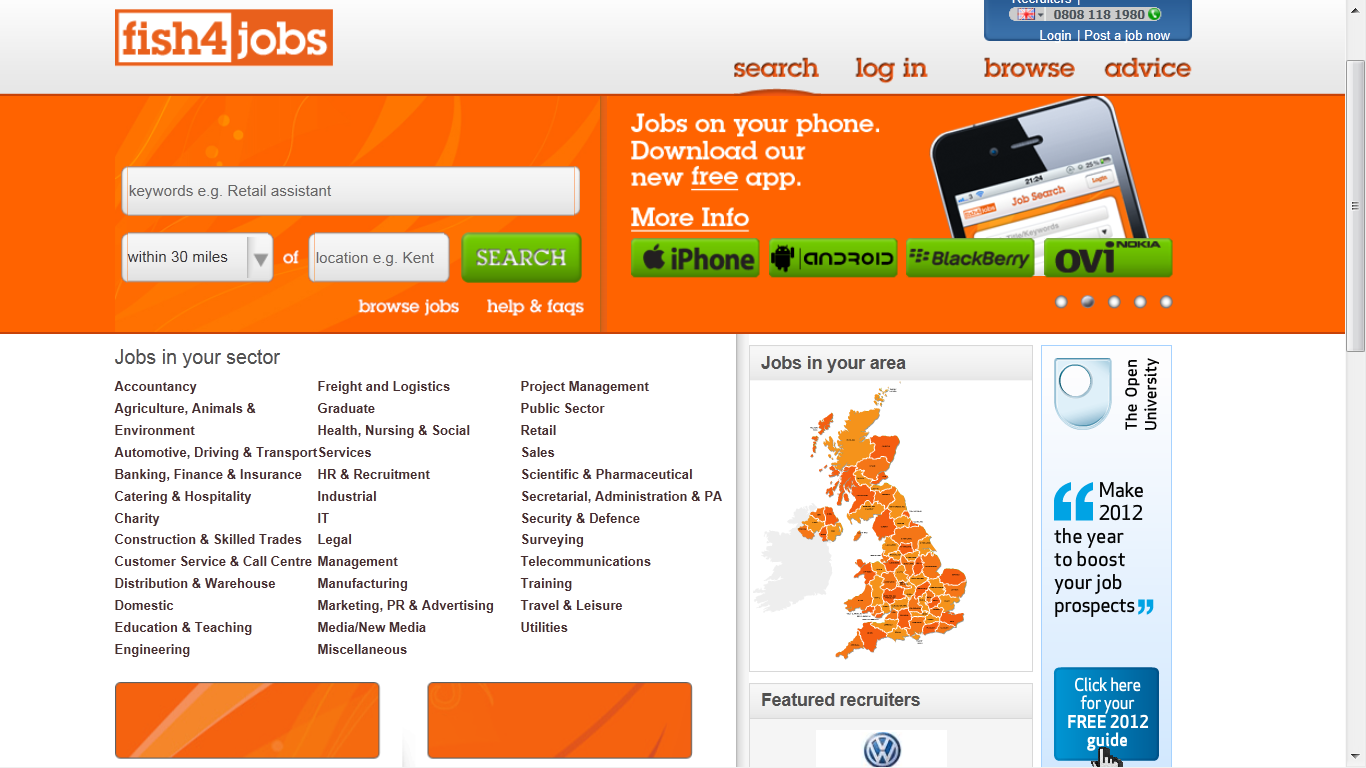
The recruitment site which I am going to analyse is Fish4Jobs. This is a website which employers post their job vacancies and potential employees can enter their details and CV to apply for the job. When you have entered your details, the website provides jobs which you may be interested in and jobs which are in your local area. It is a very useful website as it is easy to use, and can be done in the comfort of one’s own home.

This is what the home screen of Fish4Jobs looks like:


The home page of this website is very eye-catching as it has a bright colour scheme. At first glance it looks very simple to use as you only have to fill in 3 boxes to start your search (keywords, distance, and location). It is also very simple as the home page does not contain much information; just the key tools that a person would need to start their search. It also shows the different categories of jobs available, which is useful if you are not sure what keywords to start with. The main thing that caught my eye with this website is the advert at the top. Nowadays a lot of young people are looking for jobs, and young people are very familiar with using new technology, therefor I think it is a very good idea to use Apps on mobile phones to encourage them to use the Fish4Jobs service.


Once you have entered your keyword, location, and distance, the website comes up with a list of job descriptions and some more filters if you want more specific search results. Overall the layout of this website is very simple and would be easy for most people to use.

One e-recruitment campaign that caught my eye was an advert to work for the Marussia F1 team; this advert was on the Monster recruitment website. I think this job would interest a lot of people as it seems like a fun and ‘cool’ job to do; the heading for the different jobs available is even named ‘cool jobs’. This campaign also contains multimedia videos which give an idea of what the jobs involve and adds more excitement to the campaign. I think the main reason that this campaign caught my interest was  because the job advertised was made out to be a really ‘cool’ job that is in high demand.


“Ability tests are proven methods for assessing critical qualities for job success such as solving problems, communicating effectively as well as innovation and creativity. It’s for these reasons that employers use such tests widely” Anon (2011).

After completing some of the aptitude tests on the SHL Direct website I believe that they are not a good idea. Some of the questions seemed quite difficult and may put potential employees under unnecessary pressure. Some may feel that after seeing these questions they actually do not want to apply for the job at all. I think the best way is to instead, ask for a CV first, and if the person meets the requirements, invite them to an interview. From the aptitude tests you cannot get a true representation of a person’s skills and personality, these are much better shown by interviewing them in person.


References:

Marussia F1 e-recruitment campaign (2012) [online] Avaiable from: http://monstercooljobs .com/marussiaf1team/UK-EN/ [Accessed on: 18/04/12]
Anon (2011) [online] Available from: http://www.shldirect.com/practice_tests.html [Accessed on: 18/04/12]

Week 17 - Equal Opps and Diversity

The difference between equality and diversity

Equality and diversity are often mistaken to have the same, or a similar, meaning. However, this is not the case; “Equality is ensuring individuals or groups of individuals are treated fairly and equally and no less favourably, specific to their needs, including areas of race, gender, disability, religion or belief, sexual orientation and age,” Anon (2009). To ensure there is equality in all businesses and organisations the Equality Act was renewed in 2010, which states certain rules which a company must obey.  

Diversity has a very different meaning; this means difference, and people can have many differences, e.g:


·        Race

·        Culture

·        Gender

·        Sexual Orientation

·        Age

·        Marital Status  

·        Religion

·        Ethnicity

·        Disability

·        And more …


A successfully diverse workforce is one that contains people at all levels who have a range of different characteristics and who have been recruited on the basis of their abilities and competence to do the job. (HR Services Partnership, 2010).

In conclusion to the difference between equality and diversity, this shows that equality is legislation put into place to ensure that all employees are treated fairly and diversity is putting this into action in the workplace.


Age legislation came into force in 2006, as an employer what impact might this have - brain storm some ideas.

·        Age discrimination legislation makes employee benefits such as life cover, income protection and private medical insurance less sustainable in the future – Helen Pow (2007).

·        Employers will have to state clear rules on their equality policies concerning age.

·        They will have to review their recruitment process to make sure people of all ages have an equal opportunity.

·        Consultancy Watson Wyatt recently surveyed 130 UK companies and found that 50 per cent believe the Employment Equality (Age) Regulations Act 2006 is threatening the future of protection insurance in the UK – Helen Pow (2007).

What stereotypes do we tend to hold about younger and older people?

Younger People
Older People
Likely to have less experience in terms of working full time, and in terms of working with new people
May be harder to train as they are less willing to accept change and adaptation – set in their own ways
May be less willing to do hard work because of the times they have been brought up in – expect everything to be simple because of technology but this may not be the case
May not be as familiar with new technology, therefor also harder to train and may work slower
May have more of a social life so less focused on work
May not have the skills which a younger person would have – less able to do the work required of them


Suggest two ideas as to how organisations can attempt to change these attitudes.

1.  They could attempt to change these attitudes by including different activities in their training schemes. For example; for the older employees they could do a special course on computer skills and how to use the Internet properly.

2. They could encourage employees to interact with each other so that age does not seem an issue. For example; social events, or, relating to the first point, they could set up a scheme whereby the younger workers help to teach the older ones computer skills and how to use other technology.

By doing this the skills of the younger and older workers can be combined to maximise productivity out of the whole work force.

Visit one organisational website to benchmark practice in relation to equal opportunities, for example British Airways, Sainsbury’s, Asda or B&Q and explain the most innovative practices.

How have B&Q put into practice equal opportunities?

One of B&Q’s policies is to “Eliminate discrimination and promote equality of opportunity in employment regardless of age, gender, colour, ethnic or national origin, culture, religion or other philosophical belief, disability, marital or civil partnership status, political affiliation, sexual identity or sexual orientation.”

They have put this into action in many different ways but the two which I think are the most innovative are: “B&Q's workforce spans a huge age range from 16-96” and “We were well ahead of the 2004 Disability Discrimination Act (DDA), e.g. we changed our store layouts, introduced induction loops and Braille signage in customer toilets”.

The first practice shows that they are not discriminative towards age as they are able to work with people of all different ages. It also shows that they are able to adapt to the needs of these different age groups and are able to successfully train them to the standard of which they need.  The second practice shows that they are not discriminative toward disabilities; and again, they have been able to change and adapt to suit everybody’s needs.

The way that B&Q have been able and willing to change shows that they appreciate and value their workforce, and are happy to have diversity within their organisation.

Conclusion

Since the renewing of the Equality Act in 2010 there has obviously been more of an importance put on equality and diversity within businesses; these changes ensure that businesses and organisations treat their staff fairly and equally. It also ensures that people have equal opportunities when trying to find a job, as workplaces are becoming more and more diverse. This is also shown by the way businesses, such as B&Q, have made significant changes to adapt to different people’s needs.

References

Anon (2009) [online] Available from: http://www.ed.ac.uk/schools-departments/equality-diversity/about/equality-diversity [Accessed on: 18/04/12]

HR Services Partnership (2010) [online] Available from: http://www.ncvo-vol.org.uk/advice-support/workforce-development/hr-employment-practice/diversity-equal-opportunities [Accessed on: 18/04/12]

Wednesday, 14 March 2012

Week 20 - Selection

The aim of selection is to gather information about each candidate and ultimately choose the best person for the job. Three examples of different selection methods are: shortlisting from application forms, interviews, and assessment centres.

An application form contains questions relating to personal experience, education, and references. This can be done either online or written by hand; it usually requires the same information as a CV, however the questions are written by the recruitment centre. According to the website, Prospects: ‘employers use application forms to assess your motivation and skills (and your spelling, grammar and punctuation), questions are designed to assess specific attributes, so applicants can be compared systematically’. An application form is used at the very first stages of selection. For example, when I applied to work for Waitrose, the very first thing I had to do was log onto their website and fill in an application form. This consisted of a lot of multiple-choice questions, as well as open questions. It was very time-consuming and I do not believe it was a valid way of testing whether I was right for the job. The limitations of an application form are that it cannot show a person’s personality and has poor predictive validity as it is impossible to tell how the candidate will act in a real work environment. However, it is very easy for the company as they are able to write a set of questions then use the computer to tell them which candidates are suitable, without having to manually read through the forms. It can also give them quantitative data, which can show them who is most suitable and who they should invite for an interview. I think an application form is suitable for a lower-skilled job, which has a lot of potential candidates. However, maybe not so suitable for a higher-skilled job like a manager.

An interview can be done one-to-one, or as a group; this helps the employers to see the candidates’ personality as they can ask further questions and sometimes may ask the candidate to do a presentation. However, there are some limitations to doing an interview as a method of selection; it is a very artificial environment, meaning that it is not possible to see how the candidate would act in the real work environment. It also puts the candidate under a lot of pressure, and can be a very scary experience, meaning their true personality will not be shown. It can also be very subjective and have poor predictive validity, meaning it is hard for the interviewer to find out what they really want to know (e.g. how well the candidate is suited to the job). An interview is usually conducted after an application form or a CV is handed in, the recruiters select the most suitable applicants then invite them for a job interview, which is more personal. Recently I filled out an application form online, and a few days later received an email inviting me to attend an interview.

An assessment centre usually happens over a whole day or a period of days; Pearson Educations definition of an assessment centre is: ‘a set of performance-simulation tests designed to evaluate a candidate’s managerial potential’. A group of candidates are brought together and assessed by a group of observers; tasks can either be set to be done individually or as a group. One benefit of an assessment centre is that a wide range of skills can be assessed; for example, a group exercise can assess team work and leadership skills, whereas an individual task can assess presentation and communication skills. Assessment centres can provide a more comprehensive overview of an individual’s strengths and limitations than any single selection method, they are standardised so everyone who takes part in the same exercise has the same opportunity to demonstrate their skills and abilities, they are more objective than an interview alone which can depend on just one person’s interpretation, they allow a candidate to show a range of abilities in a variety of situations, and feedback on performance may help you understand your own strengths and development needs. A limitation is that they are very time consuming and expensive, however, a quicker decision can be reached and shared by decision makers as they have a fuller overview of each candidate.

The only interview which I have taken part in was an interview for Waitrose; I had previously filled in an application form online and was invited along to a group interview at the branch. There were about 5 other candidates in the interview. First we were asked to think about something which we had achieved in the past 12 months and do a short presentation to the rest of the group; this was quite nerve-wracking but was good as it showed the recruiters our presentation and communication skills, and also told them a little bit about ourselves. We were then given a list of products to find in the store, this helped us to learn our way round the shop floor and showed the recruiters whether we preferred to work alone or as a team, as they did not specify how we should complete the task. This group interview was very informal, and quite short. I do not think it was very productive as the recruiters did not find out much about us and could not see how we would have worked in a real situation. I was then invited for a second interview which was one-on-one. This interview was a bit more successful as more questions were asked about how I would personally go about different tasks. This interview was also very informal, and more like a general chat than a job interview. I think the way they made the interview informal was a good thing as the candidates were less nervous, therefore showing their personality more.

To make this selection process more effective I would recommend they conduct role-play within the group interview. For example; the candidate could be asked a question about where a certain food is on the shop floor, and the candidate would have to react in the way which they think is correct. This would definitely benefit the selection process; for example, if the candidate turned round to the pretend customer and said “I don’t know”, instead of, “sorry I’m not actually sure but I’ll take you to another employee who can help”, then the recruiters would know that they are unsuitable for the job.

In conclusion I think there must be several stages in the selection process for it to be effective. There are benefits of having an application form as the first stages as it is easy and cheap for the company, and can quickly determine who is not suitable for the job at all. It may be a bit unfair to the candidates as their true personality cannot show, but I think it is a suitable process for lower-skilled jobs. I think a group interview or assessment centre is good for the second stage of the selection process as the recruiters can see a wider overview of each candidate; however I think a one-to-one personal interview also needs to be conducted in an informal manner. There also should be an element of role-play as this is the best way to see how a person would act in a real work environment.

References:

Dransfield, R. (2000) Human Resource Management. Oxford: Heinemann.

Koster, M. (2002) Human Resource Management: Classic selection methods and alternatives. Germany: Grin Verlag.

Pearson Education, student resources. Glossary. [online] Available from: http://wps.pearsoned.co.uk/ema_uk_he_robbins_orgbeuro_1/151/38825/9939244.cw/content/index.html [Accessed on: 14/03/12]

Prospects. Job Application Advice. [online] Available from: http://www.prospects.ac.uk/job_applications_your_application.htm [Accessed on 14/03/12]


Friday, 24 February 2012

Week 5 - Leadership

A leader is someone who guides a group of people or a team towards a goal, and encourages each individual to pursue their task. A manager usually has a higher job title, and it is their job to complete a set task. Both a leader and a manager are in charge of the team, however a manager controls the team as part of their job, a leader naturally controls the group because of their own decision and a decision made by the team that they will be a good leader to get the task done.

There are different types of leaders, some people believe that people have certain traits which make them ‘born leaders’, however others believe it  is something that you have to learn. There are also democratic, autocratic, and laissez-faire leadership styles, which usually depend on the type of organisation. My leadership example is from when I worked at Waitrose.

In Waitrose there are a number of different leaders; one for each section, who controls their group of employees. On the main shop floor of Waitrose the leaders show a democratic leadership style. Employees are encouraged to make decisions themselves, but have support of their leader if necessary. This gives employees empowerment to make their own decisions, which means less decision making needed from the leaders and a better working team. However, in the head office the leadership style is more autocratic, and all decisions are made by only the very top leaders. In one branch of Waitrose, primary research has shown that the leaders follow the ‘Trait theory’. This suggests that leaders are born with certain traits, such as: intelligence, responsibility and enthusiasm; all of which are needed to be a successful leader. Primary research at Waitrose shows that most of the leaders already have all the traits needed to be a good leader, suggesting that they were born with these traits, and therefore are already a respectable leader. One of my colleagues had no higher job role than me, however was seen as a leader of the team as they were very enthusiastic and showed a lot of initiative. This suggests that they were more of a ‘born leader’ than some of the other employees.

John Adairs’ contingency theory suggests that good leaders should have full command of the three main areas of the Action Centered Leadership model, and should be able to use each of the elements according to the situation (John Adair, 1992). The three areas are; achieving the task, managing the team, and managing individuals. Adair suggests that we are not born leaders, but with the potential to become leaders. Waitrose shows a link to this theory in their leadership styles; they are set a reasonable task and it is up to the leader to make sure the team as a whole and each individual knows what they can do to help achieve the task. Each individual can help towards their end goal by making the right decisions and in the end will feel empowered that they have been part of the team. This also relates to my colleague, who was always the person to encourage us to pursue the task, therefor a good leader.

Goleman has suggested that there are six different leadership styles: visionary, coaching, affiliative, democratic, pace-setter, and commanding. Research has shown that most leaders in Waitrose are pace-setters, although it depends which section they are leading. Pace-setters push to accomplish tasks, making sure every member of their team knows the set goals. This is a good leadership style to have as Waitrose is very large and has a lot of employees, so the leaders need to make sure every employee is pushing themselves to reach the goals.

References:

 Addair, J. (1992) [online] Available from: http://www.callofthewild.co.uk/library/theory/john-adairs-action-centred-leadership/ [Accessed on: 22.01.12.]

Schein, E. H. (2010) Organisational Culture and Leadership. 4th Ed. USA: P.B. Printing.

Thursday, 23 February 2012

Week 4 - Organisation Culture

Organisational Culture


Organisational culture describes the attitudes, values, and assumptions of how the organisation conducts itself. A culture is created when a group of employees interact and become one in terms of their beliefs and attitudes in the workplace.

The visible aspects of a culture are ones you can see straight away, for example: office layout, uniforms, status symbols, rites & rituals, stories, and taboos. My example of visible culture is in Waitrose; employees working on the shop floor all wear the same uniform showing equality in their culture, and the managers wear suits showing their status symbol.

Handy (1993) suggests that we can put organisations into four different groups. The forming of a culture in a work environment will depend on structure, technology, employees, etc. The four different culture groups are: power, role, task, and people.

The power culture:


Handy describes the power culture as a web; this reflects the power of a family owned business. Power is concentrated in the middle of the wheel and is then passed down through important members of the family to other members of the work team. One disadvantage of this type of culture is that family members are often prioritised and non-family members may feel undervalued and may not have very much influence towards the business. An example of a family owned business from my personal experience is my dad’s business; Handy’s model relates to this business because I, as a family member, was able to work when I wanted to (for example: in the summer holidays).

The role culture:


Handy refers this culture as a Greek temple; he suggests that the strength of this culture lies in the specialisation of the employees in the ‘pillars’, but the roof of the temple is where all the decision-making takes place. The authority is dependent on job title and how high up in the business an employee is. This culture is seen in a lot of public sector businesses and most often in businesses which go through little change.

The task culture:


In this culture all departments are closely linked, and decision making is done by individuals who have the knowledge, not just the ones with the highest job title. This is quite the opposite of the role culture, and is seen mostly in organisations which go through constant change and are involved in research and development.

The person culture:


This culture rejects the need for hierarchy and structure, and instead all decision-making is done by the individuals who work for the company. The culture focuses on the needs of the employees and less on the task which needs to be done. A disadvantage of this is that progress could be very slow. Therefore, this culture seems less appropriate for a business organisation.

In conclusion, Handy’s four different types are a good representation of organisational culture; however it can be hard to classify culture into just four types. Every organisation will have a different culture depending on what they do and who their employees are.

References:

Lewis, D. 2003. Practice, power and meaning: frameworks for studying organizational culture in multi-agency rural development projects. London: Open University.

Open University. [online] Available from: http://openlearn.open.ac.uk/mod/oucontent/ view.php?id=403948&section=3.5.2 [Accessed on: 23.02.12]

Sherwn, L. [online] Available from: http://www.lindsay-sherwin.co.uk/guide_managing_ change/html_overview/05_culture_handy.htm  [Accessed on: 23.02.12].